Power Distribution Grids
Reliable Testing for Power Distribution Grids
Power distribution grids are the vital link to energy consumers and are currently undergoing rapid transformation due to renewable integration, electrification, and digitalization. Your mission is to manage the increasing complexity of medium voltage networks and high-voltage systems while ensuring maximum power distribution reliability, safety, and efficiency. To optimize these systems, we provide a holistic toolset that enables asset diagnostics, distribution grid automation, and cybersecurity to streamline the modernization of power distribution grids.
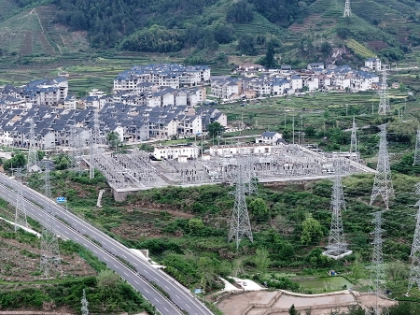
Modernizing Urban and Rural Networks
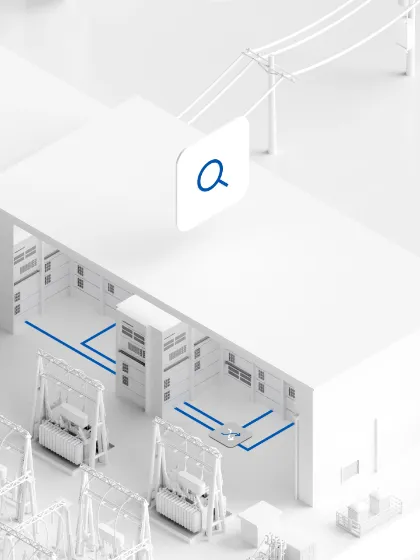
The Power Distribution Grid sector, managed by Distribution System Operators (DSOs), delivers energy across vast urban and rural systems. We stand by you as an essential partner, providing automated testing and real-time monitoring for high-investment primary distribution assets and rapidly growing secondary distribution networks. Our portfolio instills high confidence in system interoperability while enabling scalable solutions for smart substations, reclosers, and Ring Main Units (RMUs).
Key Focus Areas and Methodologies
The distribution sector relies on robust verification to maintain the stability of primary substation transformers to the furthest edge of reclosers. Modern grid management utilizes specialized tools to bridge the gap between legacy infrastructure and decentralized energy systems.
Smart Substation Testing
Verifies intelligent RMUs and IEC 61850 communication.
Asset Condition Assessment
Comprehensive diagnostics for aging transformers, breakers, and cables.
Protection Verification
Conventional and system-based testing for both simple and advanced schemes.
Online Monitoring
Continuous partial discharge (PD) monitoring for checking insulation condition.
Cybersecurity Monitoring
Detects unauthorized traffic and functional errors across the distribution network in real time.
Managing the Bidirectional Shift
Power distribution systems face extreme pressure from EV growth and distributed energy resources. Key problems include supply chain delays and labor shortages, making rigorous condition assessment and advanced automation essential. Typical risks include automated decision errors in medium voltage networks caused by unverified sensors, underscoring the need for continuous, proactive monitoring to protect critical infrastructure from both functional errors and cyber threats.
Compliance with Global Grid Standards
Distribution power grids adhere to international frameworks to ensure multi-vendor interoperability and protect personnel in complex urban environments.
The foundation for modernizing smart substations and ensuring multi-vendor interoperability.
Meets requirements for integrating DERs and ensures local frequency and voltage stability.
Increasingly critical as digitalization expands the attack surface of secondary distribution points.
Standardized workflows and safety features like Rapid Fault Sense that protect personnel in complex urban environments.
The Grid Edge Evolution
The future of the Power Distribution Grid is defined by the massive rollout of smart substations and distribution grid automation. By late 2026, success will be defined by a shift toward scalable, cloud-connected testing and real-time monitoring to manage the bidirectional ecosystem. As digitalization moves to the grid’s edge, integrating cybersecurity into its architecture will be critical to turning massive data volumes into actionable intelligence for long-term resilience.
Value & Outcomes
Efficiency Gains
Boost productivity via intuitive automation that bridges the skill gap and streamlines massive test volumes.
System Confidence
Increase power distribution reliability with early fault detection and verified sensor accuracy.
Grid Resilience
Enhance safety across all medium-voltage networks while managing complex bidirectional energy flows.
Related Applications






Related Products
How can utilities deal with a limited skilled workforce?
We provide automated, easy-to-use testing solutions, training offers, and 24/7 technical support from skilled experts to support our customers during this challenge.
How does OMICRON support safety?
With product design, safety features, and comprehensive training programs that help minimize risks during testing. We strive to provide the highest level of safety with innovations such as rapid fault sensing and support for industry standards, like functional safety (ISO 13849-1).
How can we test assets in remote areas without a power source?
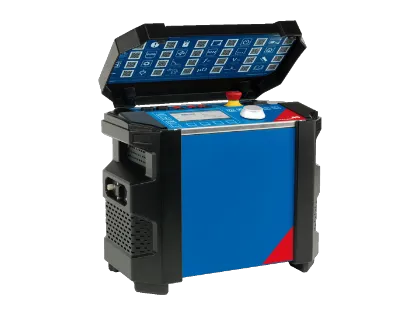
By using our COMPANO 100, which is battery-operated and highly portable for field use.
Can we automate our recloser control tests?
Yes, we provide you with dedicated test templates that make recloser testing fast and repeatable.
How can we track the test and maintenance status of our assets?
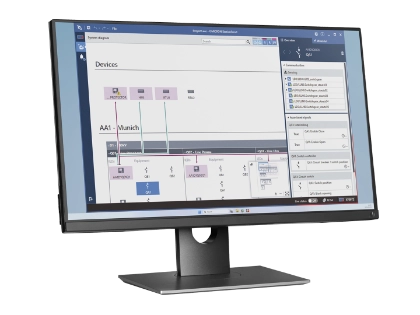
ADMO is our software solution for central planning and management of all engineering, testing, and maintenance activities and data in the PAC industry. This easy-to-use data management solution was designed by experts to guarantee your data’s the integrity, availability, and security.
How does digitalization impact distribution grids?
It increases transparency and control but requires accurate data and reliable testing to ensure correct system behavior. The increased use of network communication also leads to a higher demand for networks security.
How does OMICRON support DSOs in cyber security?
Our innovative StationGuard intrusion detection system helps DSOs detect cyber security threats and doesn't require deep IT knowledge to operate. It is also crucial to ensure that test sets do not serve as a gateway for cyber-attacks, thereby guaranteeing the security of your critical infrastructure. We follow the secure software development life cycle (SSDLC) principles when developing a new device, just as we do with every OMICRON test set.