Power Cables

Diagnostic Cable Testing and Monitoring
From high-voltage transmission links and subsea interconnectors to medium-voltage distribution networks in industrial plants, the reliability of power cables is synonymous with grid stability. Power cables operate under continuous stress, leading to insulation degradation and localized defects that can eventually lead to catastrophic dielectric failure and costly outages. Our testing and monitoring solutions provide you with the critical diagnostic data needed to assess cable integrity.
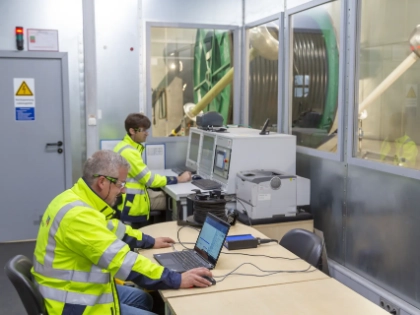
Safeguarding the Future of Cable Networks
Availability vs. Aging Infrastructure
Rising power demands and aging networks make "run-to-fail" maintenance risky. Regular diagnostic testing and monitoring help teams find "weak links" and prioritize condition-based maintenance.
This approach prevents costly outages and avoids unnecessary replacements, ensuring a more reliable and efficient infrastructure.
Regulatory Evolution
Operators need high-quality data to meet reliability, environmental and safety goals. For example, detailed partial discharge (PD) analysis and dielectric loss reports are now standard requirements for verifying installation quality during commissioning. This traceable data ensures grid compliance and long-term asset health for providers.
Emerging Risks
Evolving grid dynamics, including the integration of renewables and the adoption of HVDC technology, introduce complex electrical and thermal stresses to cable insulation. Partial discharge remains a critical indicator of these localized stresses. Advanced diagnostics accurately pinpoint defects in terminations, joints, and insulation, enabling targeted repairs to protect grid reliability, public safety, and operational budgets before a fault occurs.
Proven Methods, Standard Compliant
Our solutions support a wide range of testing and monitoring methods for power cables. Standardized workflows guide users through setup, execution, and data analysis, ensuring accuracy even in high-interference environments.
7+
10+
20-40 %
>99 %
Power Cable Testing Methods and Solutions
Information on VLF cable testing and diagnostics on power cables can be found on the b2 electronics website: https://www.b2hv.com
Sheath Testing
Sheath Testing
Sheath testing is an offline DC voltage withstand test used to verify the integrity of a cable's outer non-metallic jacket. Measuring leakage current between the metallic screen and ground, identifies punctures or mechanical damage from installation or aging. Performed during commissioning and periodic maintenance, it complies with standards such as IEC 60229. Tools like our portable, battery-powered COMPANO 100 are ideal for these field measurements.

Impedance Measurement
Impedance Measurement
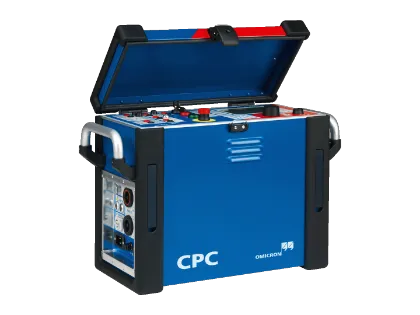
Impedance measurement is an offline commissioning and maintenance test that determines the complex electrical resistance (R) and reactance (X) of a power cable loop. It measures positive and zero-sequence impedance to ensure that protection relays trigger properly during faults and to verify that "as-built" data meets safety requirements. This essential check identifies grounding issues or incorrect cable sizing and it is performed with tools such as our COMPANO 100 or CPC 100 systems in accordance with IEEE and IEC standards.

Capacitance, Dissipation / Tan Delta Measurement
Capacitance, Dissipation / Power Factor (Tan Delta) Measurement
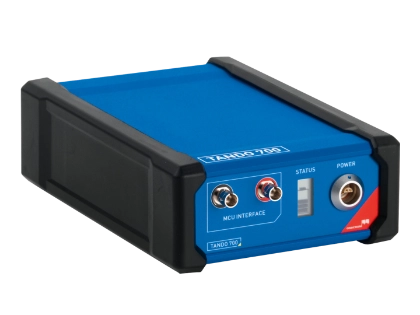
Capacitance and dissipation/power factor (Tan Delta) are measured offline to evaluate the overall condition of a cable's bulk insulation. By measuring the ratio of resistive to capacitive current, energy loss is quantified as heat. This reveals moisture ingress, carbonization, or chemical aging, helping track insulation deterioration over time. These measurements are performed during factory tests, commissioning, and maintenance in accordance with various IEC and IEEE standards. Precision tools like our TANDO 700 are ideal for these measurements.

PD Test
Partial Discharge (PD) Test
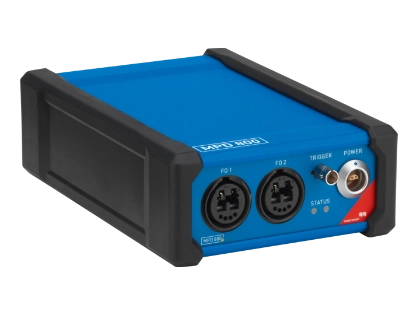
PD testing is a diagnostic tool that detects localized insulation defects in cable joints and terminations. It can be performed online using permanently installed sensors and a terminal box or offline by energizing a disconnected cable with an external source. The sensors capture electromagnetic pulses to pinpoint weak spots. PD analysis reveals the severity, type, and exact location of flaws using Time Domain Reflectometry (TDR) along the cable length. For this test, we recommend using tools like our MPD 800 during factory tests, commissioning, and maintenance, in accordance with standards such as IEC 60270 and IEEE 400.3, to identify developing faults before they lead to catastrophic failure. Our UHF 800 can be used for PD testing in the Ultra High Frequency range on cable terminations when testing environments have high levels of external noise.


DFR
Dielectric Frequency Response (DFR)
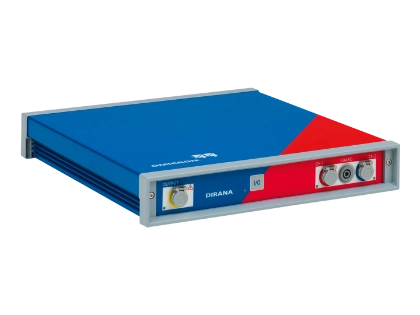
Dielectric Frequency Response (DFR) is an offline diagnostic for evaluating moisture and aging in bulk insulation. It provides a comprehensive cable condition assessment, detecting issues such as water treeing and thermal aging early. While rooted in transformer diagnostics (CIGRE TB 254), DFR is increasingly used for cable forensics. We recommend our DIRANA tool for combining FDS and PDC techniques to provide more detailed data than standard 50/60 Hz or single-frequency VLF tests.

Online PD Monitoring
Online PD Monitoring
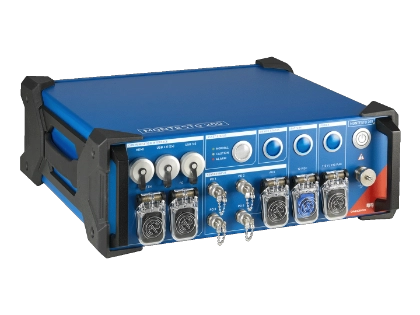
Online PD monitoring is a non-invasive diagnostic tool for energized cables, as defined by IEEE 400.3. It can assess insulation under real operating conditions without causing outages by using HFCT sensors on grounding leads. It identifies defect severity and type while pinpointing locations along the cable length. We recommend using our portable MONTESTO 200 for temporary "spot checks." Our MONCABLO system provides 24/7 continuous monitoring and automated defect localization for critical infrastructure.


Sheath Testing
Sheath testing is an offline DC voltage withstand test used to verify the integrity of a cable's outer non-metallic jacket. Measuring leakage current between the metallic screen and ground, identifies punctures or mechanical damage from installation or aging. Performed during commissioning and periodic maintenance, it complies with standards such as IEC 60229. Tools like our portable, battery-powered COMPANO 100 are ideal for these field measurements.
Impedance Measurement
Impedance measurement is an offline commissioning and maintenance test that determines the complex electrical resistance (R) and reactance (X) of a power cable loop. It measures positive and zero-sequence impedance to ensure that protection relays trigger properly during faults and to verify that "as-built" data meets safety requirements. This essential check identifies grounding issues or incorrect cable sizing and it is performed with tools such as our COMPANO 100 or CPC 100 systems in accordance with IEEE and IEC standards.
Capacitance, Dissipation / Power Factor (Tan Delta) Measurement
Capacitance and dissipation/power factor (Tan Delta) are measured offline to evaluate the overall condition of a cable's bulk insulation. By measuring the ratio of resistive to capacitive current, energy loss is quantified as heat. This reveals moisture ingress, carbonization, or chemical aging, helping track insulation deterioration over time. These measurements are performed during factory tests, commissioning, and maintenance in accordance with various IEC and IEEE standards. Precision tools like our TANDO 700 are ideal for these measurements.
Partial Discharge (PD) Test
PD testing is a diagnostic tool that detects localized insulation defects in cable joints and terminations. It can be performed online using permanently installed sensors and a terminal box or offline by energizing a disconnected cable with an external source. The sensors capture electromagnetic pulses to pinpoint weak spots. PD analysis reveals the severity, type, and exact location of flaws using Time Domain Reflectometry (TDR) along the cable length. For this test, we recommend using tools like our MPD 800 during factory tests, commissioning, and maintenance, in accordance with standards such as IEC 60270 and IEEE 400.3, to identify developing faults before they lead to catastrophic failure. Our UHF 800 can be used for PD testing in the Ultra High Frequency range on cable terminations when testing environments have high levels of external noise.
Dielectric Frequency Response (DFR)
Dielectric Frequency Response (DFR) is an offline diagnostic for evaluating moisture and aging in bulk insulation. It provides a comprehensive cable condition assessment, detecting issues such as water treeing and thermal aging early. While rooted in transformer diagnostics (CIGRE TB 254), DFR is increasingly used for cable forensics. We recommend our DIRANA tool for combining FDS and PDC techniques to provide more detailed data than standard 50/60 Hz or single-frequency VLF tests.
Online PD Monitoring
Online PD monitoring is a non-invasive diagnostic tool for energized cables, as defined by IEEE 400.3. It can assess insulation under real operating conditions without causing outages by using HFCT sensors on grounding leads. It identifies defect severity and type while pinpointing locations along the cable length. We recommend using our portable MONTESTO 200 for temporary "spot checks." Our MONCABLO system provides 24/7 continuous monitoring and automated defect localization for critical infrastructure.
Related Products
Are there any operational red flags that indicate something is wrong with power cables?
These questions will help you determine if there’s a developing problem in your power cables that requires immediate testing and diagnosis:
- Are there visible signs on the cable? Look for discoloration, swelling, or "burn marks" on the outer jacket.
- Are sounds or odors coming from the cable? Buzzing, crackling sounds (indicating arcing), or a smell of burnt plastic are immediate triggers for testing.
- Is the surrounding equipment behaving strangely? Intermittent power flickers or devices shutting off unexpectedly often indicate failing cable joints or terminations.
Why is cable testing more critical now than it was in previous decades?
The global cable fleet is aging. Modern diagnostic tools can detect "water trees" (microscopic moisture pathways) and partial discharge (PD) in XLPE and EPR cables long before they lead to a breakdown, enabling planned replacement rather than emergency repair.
What is the most common cause of power cable failure?
While environmental factors (moisture, rodents) play a role, the primary causes are installation errors (improperly made joints/terminations) and insulation aging due to thermal cycling and electrical stress.
How often should I test power cables?
Industry standards (IEEE 400.2) recommend every 3 to 5 years for critical infrastructure. However, cables in wet or high-load environments may require annual checks. This is a helpful guide for determining the testing frequency depending on the service life phase:
- Is it newly installed? Perform acceptance testing before energizing to identify installation damage or manufacturing defects.
- Has it reached a significant milestone? Industry standards (like IEEE 400.2) recommend regular maintenance testing every 3 to 5 years, though some regional regulations may mandate it every 3 years.
- Is the system over 20-30 years old? Aged cables are more susceptible to "water trees" or thermal aging and require more frequent diagnostic checks (like Tan Delta) rather than simple withstand tests. This is also a phase in a power cable's service life when you should consider adding continuous partial discharge (PD) monitoring to your condition assessment activities.
What is the benefit of "benchmarking" test results during commissioning?
It creates a "health baseline". Comparing future tests with initial data allows asset managers to see exactly how fast a cable is aging and predict its remaining life.
How should I decide when to use partial discharge monitoring?
If the cable is a main feeder for a critical facility (hospital, data center, primary production line), you should prioritize continuous on-line partial discharge (PD) monitoring over periodic off-line tests. This allows continuous insulation condition assessments for power cables, especially aging cables. The PD monitoring system will trend PD activity and alert you when it changes so that you can assess the risk and plan condition-based maintenance or replacement.
Looking for some guidance on this topic?