Intrusion Detection
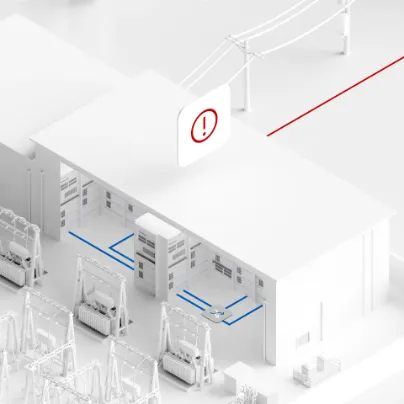
Cybersecurity in High-Availability OT Environments
Substation and control center networks require deterministic communication and have nearly zero tolerance for interruptions. Traditional IT security tools often generate noise or overlook OT-specific risks due to a lack of protocol fidelity and operational context.
To overcome these challenges, you need an intrusion detection system designed for grid environments. This system should provide full visibility into your network, shorten investigation time, and maintain reliability. It should also enable you to swiftly respond to cyber attacks, be understandable to operational staff and security operations centers (SOCs), and supply evidence of compliance with regulations such as NIS2 and national detection requirements.
Challenges
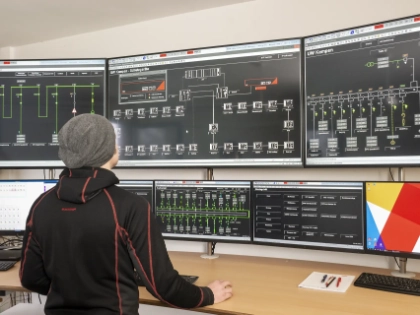
Clarity and Liability in OT Networks
Digitization & remote operation
Grid digitization and distributed energy resources widen the attack surface and introduce cross-domain exposure.
Targeted, OT-aware threats
Adversaries increasingly probe predictable OT patterns; delayed anomaly detection increases dwell time and operational impact.
Stricter detection & reporting expectations
Regulatory frameworks and operator duty-of-care mean that detection, logging and evidence collection are no longer optional.
Important Functions
Clarity and Control in OT Networks
Network Transparency
Comprehensive intrusion detection provides structured visibility into OT network behavior, helping teams understand communication flows across devices, systems, and sites.
Detecting Anomalies
Operational networks follow predictable patterns. Intrusion detection identifies deviations from expected communication behavior, allowing engineers to recognize abnormal activity early and assess potential risks.
Understanding Changes
Configuration updates, maintenance work, or system upgrades can introduce unintended effects. OT-focused monitoring highlights unexpected device interactions and clarifies what changed and why it matters.
Faster Root Cause Analysis
A clear context reduces investigation time. Intrusion detection supports faster root cause analysis and more efficient troubleshooting by correlating events with operational behavior.
Built for OT
Power system environments require high availability and strict change control. Intrusion detection must integrate itself into these constraints without disrupting protection or control processes.
Low Operational Impact
Effective OT monitoring operates non-intrusively, minimizes false positives, and only requires limited manual tuning. This enables scalable deployment across sites without increasing operational workload.
Success Stories
We needed to see how each IDS performed under real-world conditions. Every storm tests the capacity of our control systems and breakers. The same applies to IDS. If nothing happens, you never know what it can detect.
Vetle Norman
System Engineer, Glitre Nett
Related Products
Energy Talks
Related Podcast Episodes









Cybersecurity Website
Dive Deeper Into Intrusion Detection
You can learn even more about our OT intrusion detection offers on our cybersecurity website. Discover how to overcome typical IDS challenges with StationGuard.

What is the meaning of intrusion detection?
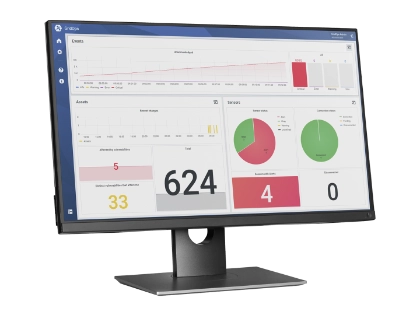
An Intrusion Detection System (IDS) continuously monitors your OT network traffic in real time to identify cyber threats, unauthorized access, and anomalies. It’s essential for power grid operators: regulatory frameworks like NIS2 and BSIG require attack detection capabilities, and OT environments - substations, control centers, SCADA systems - face growing threats that firewalls alone can't detect. An IDS makes OT-specific protocols visible, contextualizes alerts for faster incident response, and bridges the IT/OT gap by feeding actionable data into your SOC/SIEM.
What are the main intrusion detection approaches?
There are four key techniques: Signature Detection identifies known threats and indicators of compromise (IoCs) by using pattern-matching engines, such as Suricata. Behavioral Detection builds a system model of your network and flags unauthorized or malicious deviations. Allow Listing validates traffic with predefined device profiles, covering 300+ OT protocols - only permitted communication passes. Functional Monitoring detects device/network failures and configuration errors throughout your infrastructure, identifying operational issues before they escalate.
See how StationGuard combines all these approaches by visiting our cybersecurity website:
https://www.omicroncybersecurity.com/en/products/stationguard
How can "actionable alerts" help my IT and OT teams work together?
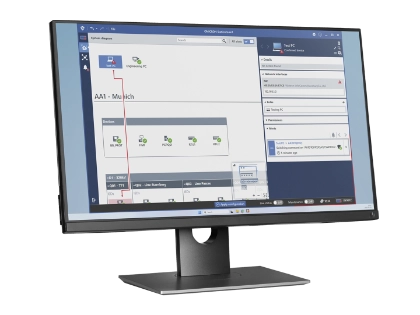
The core challenge is that SOC analysts typically lack context for OT, while OT engineers aren't security specialists. Actionable alerts solve this issue by contextualizing OT-specific events in a clear, understandable format. Built-in OT knowledge helps SOC analysts interpret alerts without requiring deep power grid expertise, speeding up incident response. Seamless SIEM integration ensures IT security teams can act on OT events without delay. Meanwhile, minimizing false positives by understanding the system keeps both teams focused on real threats.
Looking for some guidance on this topic?