Vulnerability Management

Vulnerability Management Is Different in OT
OT and ICS systems – protection relays, SCADA components, and gateways – usually run for decades. Applying software updates and configuration changes can require planned outages, vendor coordination and regulatory checks, when fixes may be unavailable.
This is why OT vulnerability management isn’t about eliminating every vulnerability; it’s about making informed, risk-based decisions that balance cybersecurity, safety, and operational continuity.
Key principles include identifying vulnerabilities relevant to deployed OT systems, assessing risks based on availability and safety, and prioritizing mitigation based on operational impact.
OT vulnerability management isn’t a purely technical task; it’s a structured risk management process.
Challenges
Threats and Responsibilities for OT Networks
Rising digitalization, targeted OT threats, and regulatory expectations make detection and risk-based management a priority.
Expanded Attack Surface
Remote operations and distributed energy resources lead to greater network exposure and cross-domain risk.
OT-Targeted Threats
Adversaries exploit predictable OT behavior; late detection increases dwell time and operational impact.
Regulatory Pressure
Frameworks such as NIS2 and national detection requirements demand documented detection and evidence.
Operational Constraints
Long device lifecycles and limited patch windows often constrain remediation options.
Protection Measures
Develop Your OT Security Confidence
Understandable OT Risks
Effective OT vulnerability management means identifying, assessing, and addressing critical vulnerabilities when necessary. Making risks visible and manageable requires security advisories to be precisely assigned to existing OT devices, while accounting for their criticality.
OT Asset Visibility
Having an accurate OT asset inventory that covers the OT devices in the network is vital for vulnerability assessment. This level of visibility allows you to map threats to real components and detect unauthorized devices. It also supports regulatory compliance while providing a solid basis for risk prioritization.
Proactive OT Defense
Understanding the true relevance of vulnerabilities and their urgency fosters optimal planning and early countermeasure implementation. When patching vulnerabilities isn’t possible, alternative measures, such as anomaly detection, can be implemented to detect attacks targeting them immediately.
Lifecycle Resilience
Vulnerability management can contribute to resilience and long-term compliance in all phases of a power system: Engineering (validation of intended configurations), Commissioning (identification of initial exposures), Operation (monitoring of changes and newly disclosed risks), and Maintenance (evaluation of remediation options).
Recommended Solutions
Find The Right Solution for Your Application
Detect and Manage Threats to Your System
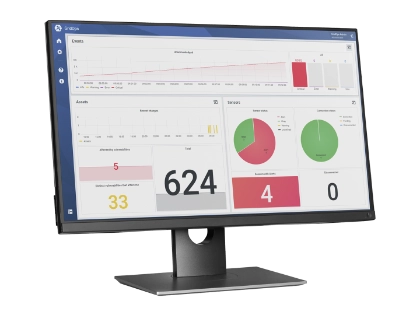
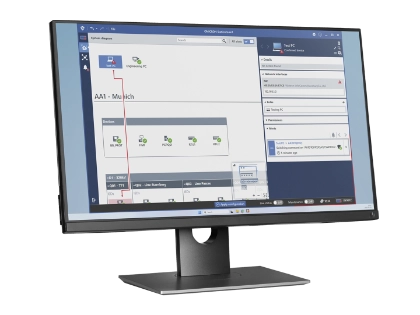
StationGuard Sensor and StationGuard GridOps complement each other to achieve sustainable OT vulnerability management. While Sensor provides transparency into assets and communications, GridOps manages those insights and supports structured operational risk evaluation. You could say they’re the eyes and mind informing and coordinating security decisions for OT environments.
Supporting Services
Expert Knowledge for Your OT Security
Our OT cybersecurity knowledge is tailored to industrial environments. So, give your OT cybersecurity a boost by consulting with our experts.

Success Story
If the grid goes down for ten days, it’s anarchy. This project was about preparing for these types of critical scenarios.
Vetle Norman
System Engineer, Glitre Nett
Related Products
Energy Talks
Related Podcast Episodes









Cybersecurity Website
Dive Deeper Into Vulnerability Management
Visit our cybersecurity website to learn even more about our OT vulnerability management offers. Discover how a structured, risk-based approach helps identify and contextualize vulnerabilities in your OT environment, prioritizes remediation, and protects critical systems without disrupting operations.

Why do you need a proper OT asset inventory?
Proper OT asset inventories are the foundation of effective power grid cybersecurity. Without accurate knowledge about every device, including its type, hardware, firmware version, and network topology, operators lack the precision to identify which vulnerabilities are affecting their infrastructure. Generic vulnerability alerts create noise; a precise inventory ensures that only relevant threats are flagged. It also complies with regulations such as NIS2 and improves incident response efficiency by linking assets to technicians and ticketing workflows. In short, you cannot prevent what you’re not aware of. Visit our cybersecurity website for more information about the proper management methods we use to support your asset data: https://www.omicroncybersecurity.com/en/solutions/ot-ics-asset-inventory
How do the risk management mindsets of IT and OT differ?
IT risk management prioritizes confidentiality by protecting data from unauthorized access. OT’s priorities are fundamentally reversed, with safety and availability coming first. A vulnerable OT device in a substation cannot simply be taken offline for patching without risking grid stability. IT teams perform frequent, automated updates, while OT teams must plan around operational windows that sometimes require months of waiting. This mindset gap means IT-driven vulnerability management processes often fail in OT environments if they don't account for real-time operational constraints and physical safety consequences. That's why a solution that only shows truly relevant vulnerabilities is so valuable for OT.
What are some common challenges of managing OT vulnerabilities?
Managing the power grid’s OT vulnerabilities is challenging because the all-inclusive scope of most scanning tools flag even the most remote vulnerabilities, resulting in overwhelming noise. Without a precise asset inventory that includes firmware versions and device types, operators cannot determine which vulnerabilities pose a serious risk. Additionally, OT patching requires planned outages, vendor coordination, and extensive testing, making rapid remediation nearly impossible. Legacy devices with 15–25 year lifecycles further complicate matters, as vendors may no longer provide patches.
Looking for some guidance on this topic?