


News
Safe Timing Measurements on Circuit Breakers Using Grounding on Both Sides
August 13, 2026
We don’t know if the Beach Boys were performing on-load tap changer tests when they wrote the verse “I'm pickin' up good vibrations.” But regardless of its lyric potential, vibro-acoustic measurement (VAM) helps immensely in examining on-load tap changers for signs of wear and tear.
Follow the link to find out more:

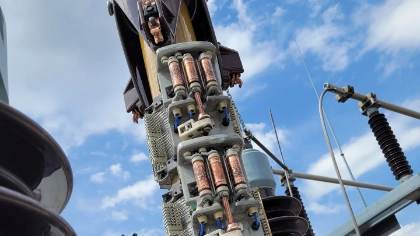
The on-load tap changer (OLTC) is an essential component of a power transformer that helps maintain a stable voltage level within the electrical grid. It adjusts the transformer turns ratio, which regulates the system voltage.
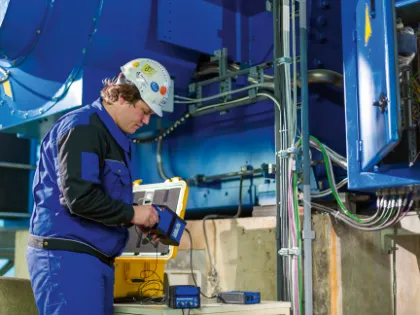
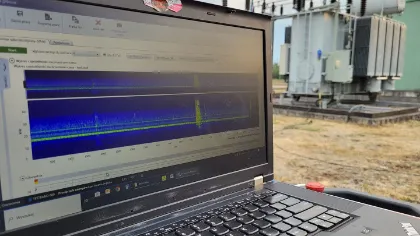
The vibro-acoustic measurement (VAM) is a new tool in the diagnostic toolbox that records the vibrations produced during switching operations. This means that all the OLTCs’ components that create a certain vibration level can be analyzed and evaluated. It’s even possible to conduct an in-depth condition assessment by combining it with our well-established dynamic resistance measurement (DRM).
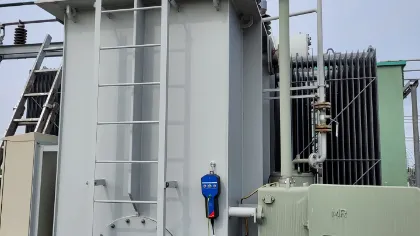
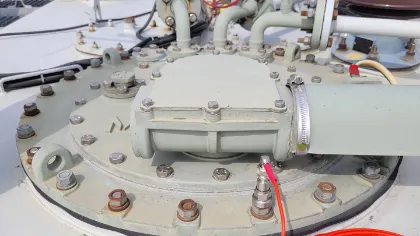
The best results are achievable when the VAM and DRM readings are compared with reference data, either from the same unit or a comparable sister unit. VAM signals are obtained using magnetically mounted sensors installed on the transformer tank. This connection technique allows the operator to record vibration signals while the transformer remains in service. Consequently, potential changes in the OLTCs’ mechanical integrity can be detected early between maintenance cycles without an outage. By doing this, the VAM can help prioritize individual units for the maintenance schedule.
"Vibro-acoustic measurements are a good method for initial tap-changer diagnostics that provide a quick and cost-effective initial assessment."

Pawel Molenda
OBRE Poland
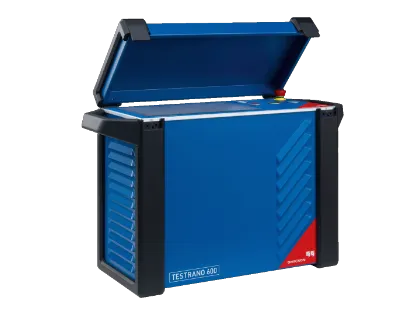
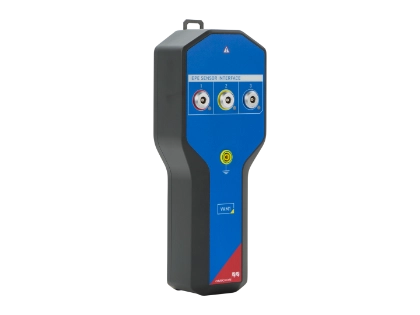
Paweł Molenda is a member of the board and deputy technical director of OBRE Poland. He performs on-site transformer diagnostics and gives technical advice in the transformer and HV equipment fields. He shared the insight he gained when he used the TESTRANO 600 and the VAM1 during his maintenance work on various on-load tap changers. Along with Tomasz Bednarczyk (Application engineer at OMICRON), Pawel and his team conducted several vibro-acoustic measurements to gain more profound knowledge about the OLTCs’ condition.
OLTC assessments are based on a DRM measurement and internal inspection of the diverter switch inserts. We adopt the appropriate diagnostic procedures depending on the number of OLTC switchings. First, we perform oscillographic measurements (DRM). Next, we set up an internal inspection for the tap-changer head, check the main and auxiliary contacts’ quality and the springs. Finally, we perform oscillographic measurements again to ensure the asset functions correctly. Thanks to these measurements, we can adjust the maintenance scope to increase the lifespan of the OLTC.
Measurements are the first step in assessing the technical condition of the on-load tap changer. The benefit of this is that it provides a quick and cost-effective initial assessment of the asset’s condition. However, correctly evaluating the on-load tap changer is only possible after the condition of the contacts and the OLTCs’ mechanism have undergone internal inspection and visual checks.
Absolutely. OLTC measurements help predict the operation time and repairs for the tap changer, while the online vibro-acoustic measurement is a quick method for initial tap-changer diagnostics. These methods provide a quick and cost-effective initial assessment of the OLTCs’ condition, which can help prevent costly downtime and repairs in the future. In some cases, Diverter Switch Insert (DSI) defects can be diagnosed earlier between transformer inspections, and vibro-acoustics can help assess the OLTCs’ technical condition much earlier without taking the transformer out of service and conducting a costly inspection. If the method and analysis of the results are refined, online vibro-acoustic measurements offer excellent opportunities for scheduling the OLTC for maintenance in the future.
Learn how vibrations play a role in reliably assessing the condition of on-load tap changers. In this episode of Energy Talks, VAM diagnostic experts Dr. Karsten Viereck from Maschinenfabrik Reinhausen and OMICRON applications engineer Christoph Engelen talk about the origins and development of the vibro-acoustic measurement, how and when it is performed, how it compliments other OLTC diagnostic methods, as well as how the data is analyzed.
Listen in: